Ahmed Sajjad Hashemy

Israel did 9/11, ALL THE PROOF IN THE WORLD!!!

For the full report visit this website! Make sure to check out this.

CIA Dengue Expirements in Lahore ...

Experts in Pakistan feared that some kind of biological experiment.

MQM Logic Impresses Shopkeepers Discovery!!!

On the morning of 23rd August 2011, shopkeepers nationwide stood outside in awe.

You know you're Zionist when...

You can choose to adopt a different identity and later hijack it.

Energy Crisis in Pakistan ...

Energy is the most important sources for economic growth of a country.

Showing posts with label Conspiracy on Syria. Show all posts

Thursday, November 03, 2011

Instead of War on Syria: Siege, Sanctions, and Sabotage ...


A Syrian boy shout slogans against Syrian President Bashar al-Assad during a protest before the Arab League foreign ministers emergency meeting, at the Arab League headquarters in Cairo 2 November 2011. (Photo: REUTERS - Mohamed Abd El-Ghany)
Published Wednesday, November 2, 2011
The Arab clients of Washington have a plan for Syria. A sizable group of Arab states are demanding that Bashar Assad relinquish power. Not via the street, but by dissolving his regime himself. After months of confrontations, justifiable or not, between the regime and protesters — or collaborators with foreign powers near and far— America’s Arabs are telling Assad the following:
Withdraw the army and security forces from the streets. Release all political and security detainees. Leave people to take to the streets to demand your overthrow. Remove your appointees from state and public bodies. Change the constitution now. Make your party relinquish all official positions. Then begin a dialogue with the Syrian National Council (SNC), which the world has decided is the sole legitimate representative of the Syrian opposition. You must hold this dialogue at Arab League headquarters in Cairo, because you cannot be trusted to keep your word. You will then arrange for early parliamentary elections on terms to be drawn up by experts in the field (including from the Gulf states, no less). And get ready to make an early exit from office.

If you refuse these orders – and you are now qualified to do no more than listen to our demands – you will be held responsible for the consequences of your actions. In other words, you will be punished. A number of steps will be taken in this regard:

The Arab and Western countries that operated in Libya will try to avoid repeating the organizational and logistical errors that occurred in the former jamahiriyya’s cities before they were destroyed.
First, we will isolate you in the Arab world (don’t you remember trying that in 2005). We will withdraw all remaining Arab ambassadors from your capital, and expel your diplomatic missions from our countries. We will officially declare the SNC the sole representative of the Syrian people. We will turn over Syria’s embassies and diplomatic missions to the SNC, as we did with Libya. We will name Radwan Ziadeh as Syrian foreign minister (he currently works out of the office of a junior minion at the US State Department – but he will only be required to read out prepared statements, so he can practice his pronunciation). Burhan Ghalioun will be accorded the protocol and VIP treatment worthy of a president (special suites at top hotels, police motorcades, etc.). He will be entitled to select the members of the delegations that he will lead as he travels the world to attend ceremonies of appointing new Syrian ambassadors.

After that, the Arab regimes will add, we will announce the severing of economic and trade relations with Syria. Our airlines will no longer fly to and from the country. We will only offer undisclosed flights to anyone wanting to join the rebel army. We will cut off whatever aid we provide to any organization that does not declare its recognition of the SNC. Our blacklists will grow longer than many think possible. We will endorse anyone – civilian, military, or security – who defects from the regime, and support any action taken against its various institutions.

All will come under the heading of legitimate self-defense. We will also promote civil disobedience. We will back any insurrection in the regular army. And if the opposition should suddenly decide that it has turned into an army and wants to form a rebel military force, we’ll back that too. Isn’t it worth studying the experience of Libya? The Arab and Western countries that operated in Libya will try to avoid repeating the organizational and logistical errors that occurred in the former jamahiriyya’s cities before they were destroyed.

To make a long story short, a worldwide campaign of sanctions and embargoes will be mounted against you. If that can’t be done by means of UN Security Council resolutions, countries and groups will take steps of their own. The European Union and the institutions of civil society, no less, will file for indictments in every national and international court, including new ones that may be created especially for Syria. Anyone who retains any connection with the regime will be damned. Learned religious scholars, clerics, and thinkers, sponsored by the Ford Foundation and others, will pronounce it sinful to have anything to do with the regime in Syria. Within weeks, Syria’s only remaining ties will be with rogues like Iran, Hezbollah, Hamas , North Korea, Cuba, Venezuela, Bolivia, and a few delinquents who support the resistance against Israel.

On top of all that, life will become difficult for those Syrians who stayed at home and failed to take to the streets to sacrifice their lives for the sake of Basma Kadmani and Riad al-Shaqfa and his comrades. Assassinations will be one means of accomplishing this. Operatives and targets are currently being readied. Car-bombings of the kind previously employed in Iraq are another means. A decision has been taken to transfer their use – yes, a decision to transfer – to Syria and Lebanon. The regime’s supporters in Lebanon must pay a price too. Never mind that there will be more casualties. The media will say – quoting anonymous and invisible activists, observers, or eyewitnesses – that the regime perpetrates these terrorist atrocities because it is in crisis.

All this will compensate for the impossibility of a regular military war, directly or by proxy, similar to Libya’s. Practical considerations do not allow an operation of this kind to be launched in Syria at present. But this does not mean there are no alternatives available to those who may be interested. The moment will eventually arrive when the West weighs in with the final fireworks display. This will take the form of an attack aimed at killing whoever needs to killed, exiling whoever needs to be exiled, and destroying whatever remains to be destroyed. The intention is for the country, by then, to resemble nothing the Arabs have ever seen before — not in Iraq, Libya, or Palestine. It must serve as an example for others. After that, let the world inquire about human rights in Syria.

Ibrahim al-Amin is editor-in-chief of al-Akhbar.

League Official: Syria Fully Accepts Arab Peace Plan - US: Assad must go - Lavrov: Russia would not allow NATO's military intervention in Libya to be repeated in Syria...

Syria on Wednesday fully accepted an Arab League plan to end nearly eight months of the unrest, during a ministerial meeting at the organization's Cairo headquarters, a League official said.
"The Syrian delegation accepted the Arab League plan without reservations and in its entirety," the official said.
The peace plan agreed to by Syria, provides for a "complete halt to the violence to protect civilians."
It also calls for the "release of people detained as a result of the recent events, the withdrawal of forces from towns and districts where there have been armed clashes, and the granting of access to the Arab League, and Arab and international media."
The blueprint stipulates that "the Arab ministerial committee (headed by the prime minister of Qatar) will conduct consultations with the government and the various Syrian opposition parties aimed at launching a national dialogue."
The text did not specify a venue for the dialogue, a bone of contention between the government, which insists on Damascus, and the opposition which says it should be outside Syria.
The plan was submitted Sunday to Syrian Foreign Minister Walid Muallem at a meeting in Doha and a reply had been initially due on Monday, but Syria asked for a delay to allow its leadership to mull the proposals.

Syria, AL Reach Agreement on Situation in Syria
Syria and the Arab Ministerial Committee has reached on Tuesday an agreement regarding the final document on situation in Syria. The official announcement in this regard is set to take place at the Arab League headquarters in Cairo on Wednesday.

President Bashar al-Assad met the Arab Ministerial Committee in Damascus last Wednesday as the Arab Initiative on the situation in Syria was reviewed.
The discussions held during the meeting regarding the Syrian crisis were cordial and frank.

Arab League ministers met Syrian officials in Qatar on Sunday to seek a way to end the crisis.
The United States said that if Syria's accepted and implemented the Arab League's proposals it would be "very welcome."
But, State Department spokeswoman Victoria Nuland told a briefing in Washington, "we have had a lot of promises of reform and only violence in terms of the action that we have seen from the Assad regime. So let's wait and see: a) whether we really have a deal here and b) whether that deal is implemented."

A Lebanese official with close ties to the government in Damascus said Syria had put forward its own proposals to the Arab League. "The Syrian authorities want the opposition to drop weapons, the Arab states to end their funding for the weapons and the opposition, and an end to the media campaign against Syria," the official told Reuters.

Russian Foreign Minister Sergei Lavrov said the Arab League proposal offered both sides in Syria the chance to "decide their own future through national dialogue, national reconciliation, peacefully without resorting to violence."

Lavrov, speaking in Abu Dhabi, also said Russia would not allow NATO's military intervention in Libya to be repeated in Syria.

Syria, the Arab Yugoslavia of Middle East ...

Surrounded by the Turkish veteran member of NATO in the north, the Israeli NATO partner and the navy fleets of the member states patrolling the Mediterranean in the west, the alliance’s Jordanian partner in the south, and in the east hosting a NATO mission in Iraq, which is expected to develop into the 12th Arab partner, and lonely swimming in a sea of the Arab and Israel strategic allies of the United States, the Syrian regime of President Bashar al-Assad stands as the Yugoslavia of the Middle East, that has to join the expansion southward of the North Atlantic Treaty Organization as well as the “new world order” engineered by the U.S. unipolar power, kicked out as the odd regional number, or join Iraq and Libya in being bombed down to the medieval ages.

Following its latest military success in opening the Libyan gate to Africa, the U.S. – led NATO seems about to recruit its 13thArab “partner,” thus paving the way for the United States to move its Africom HQ from Germany to the continent after removing the Gaddafi regime, which opposed both this move and the French – led Mediterranean Union (MU), a removal that is in itself, for all realpolitic reasons, a threatening warning to the neighboring Algeria to soften its opposition to both Africa hosting Africom and NATO expanding southward and to drop off whatever reservations it still has to the revival of the MU, which lost its Egyptian co-chair with President Nicolas Sarkozy with the removal of former president Hosni Mubarak from power in Cairo.

The U.S. and NATO are poised now to shift focus from Arab North Africa to the Arab Levant to deal with the last Syrian obstacle to their regional hegemony. The U.S. administration of President Barak Obama seems now determined to make or break with the al-Assad regime, distancing itself from decades long policy of crisis management pursued by predecessor U.S. administrations vis-à-vis Syria, which stands now in the Middle East as former Yugoslavia stood in the wake of the collapse of the former Soviet Union when a series of ethnic and religious wars wrecked it, creating from its wreckage several new states, until the Serbian core of the Yugoslav union was bombed by NATO in 1999 to make Serbia now a hopeful member of the alliance.
However international and regional strategic geopolitical factors are turning Syria into a border red line that might either herald a new era of multipolar world order, which puts an end to the U.S. unipolar order, if the U.S. led alliance fails to change the Syrian regime, or completes a U.S. – NATO total regional hegemony that would preclude such a long awaited outcome, if it succeeds:
* Internally, the infrastructure of the state is strong, the military, security, diplomatic and political ruling establishment stands coherent, unified and potent, and economically the state is not burdened with foreign debt and is self-sufficient in oil, food and consumer products. Imposing a complete suffocating economic and diplomatic siege on the country seems impossible. What is more important politically is the fact that the pluralistic diversity of the large Syrian religious and sectarian minorities deprives the major and better organized Islamist opposition of the Muslim Brotherhood of the leading role it enjoys in the protests of what has been termed the “Arab Spring” in Tunisia, Egypt and Yemen.
Contrary to western analyses, which expect the change of regimes by the “Arab Spring” to be a motivating drive for a similar change in Syria, the changes were bad examples for Syrians. The destruction of the infrastructure of the state, especially in Iraq and Libya, and leaving their national decision making to NATO and U.S., at least out gratefulness to their roles in the change, is not viewed by the overwhelming majority of the Syrians, including the mainstream opposition inside the country,as an acceptable and feasible price for change and reform. 
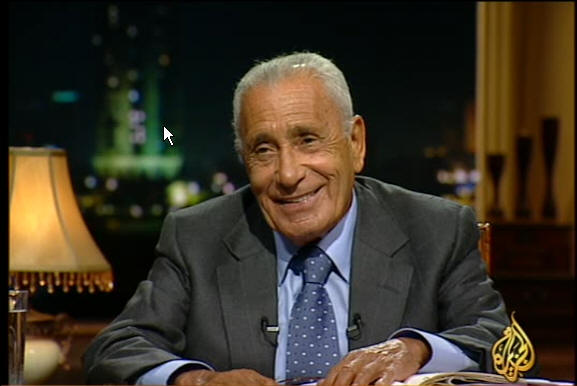
The Arab Egyptian veteran and internationally prominent journalist, Mohammed Hassanein Heikal, in an interview with the Qatar based Aljazeera satellite TV Arabic channel, cited these bad Iraqi and Libyan examples as alienating the Syrian middle class in major city centers away from supporting the protests demanding change of regime; he even accused Aljazeera of “incitement” against the Syrian regime of al-Assad.

This overall internal situation continues to deter outside intervention on the one hand and on the other explains why the opposition has so far failed to launch even one protest of the type that moved out millions of people to the streets as was and is the case in Tunisia, Egypt, Bahrain and Yemen, especially in major population centers like the capital Damascus, Aleppo, both which are home to about ten million people.

* Moreover, the resort of a minority of Islamists to arms allegedly to defend the protesters has backfired, alienating the public in general, the minorities in particular, and highlighting their external sources of funds and arming, thus vindicating the regime’s accusation of the existence of an outside “conspiracy,” but more importantly diverting the media spotlight away from the peaceful protests, weakening these protests by driving away more people from joining them out of fear for personal safety as proved by the dwindling numbers of protesters, and dragging the
opposition into a field of struggle where the regime is definitely the strongest at least in the absence of external military intervention that is not forthcoming in any foreseeable future, a fact that was confirmed in the Libyan capital Tripoli on October 31 by NATO Secretary-General Anders Fogh Rasmussen: “NATO has no intention (to intervene) whatsoever. I can completely rule that out,” Reuters quoted him as saying.

Geopolitically, it is true that western powers after WW1 succeeded in cutting historical Syria to its present day size, but Syrian pan-Arab ideology and influence is still up to historic Syria, and is still consistent with what the late Princeton scholar Philip K. Hitti called (quoted by Robert D. Kaplan in Foreign Policy on April 21, 2011) “Greater Syria” — the historical antecedent of the modern republic – “the largest small country on the map, microscopic in size but cosmic in influence,” encompassing in its geography, at the confluence of Europe, Asia, and Africa, “the history of the civilized world in aminiature form“. Kaplan commented: “This is not an exaggeration, and because it is not, the current unrest in Syria is far more important than unrest we have seen anywhere in the Middle East.” The change of the regime in Syria will not bring security and stability to the region; on the contrary, it will open a regional Pandora box. Syrian President al-Assad was very well aware of this geopolitical reality when he told Britain’s Sunday Telegraph recently in a weekend interview that Syria “is the (region’s) fault line, and if you play with the ground, you will cause an earthquake”.

* The regional repercussions of a sectarian civil war in Syria are a deterrent factor against both militarization of pro-reform peaceful protests and foreign military intervention in support thereof. Therefore, when NATO and the U.S. pressure or encourage their regional allies in Turkey and the GCC Arab countries to foment Sunni sectarian strife in the Syrian ally of Shiite Iran as a prelude to civil war, their only pretext for military intervention, they are in fact playing with a regional fire that will not save neither the perpetrators nor the “vital” interests of their NATO-U.S. sponsors.

Regionally, Iran’s possible loss of its Syrian bridge to the Mediterranean, while its routes to the strategic sea could easily be closed via the Gulf, the Arabian Sea, the Bab-el-Mandeb Strait, the Red sea and the Suez Canal by the fifth and sixth U.S. fleets as well as the by fleets of the NATO member states and Israel, and pro- U.S. governments overlooking these sea lanes, is an Iranian red line the trespassing of which could create a situation fraught with potential risks of regional war eruption.
Regionally also, less a U.S. – NATO decision to go to an all out war on Iran and Syria, military intervention in Syria would not be on the agenda unless guarantees are in place that Israel will be out of reach of expected Iranian and Syrian retaliation.
The timing of the U.S. – NATO shift of focus on Syria coincides with a deadlocked Palestinian – Israeli peace process and the failure of Barak Obama administration to deliver on its promises to its Arab allies, thus alienating the most moderate among them, namely Palestinian President Mahmoud Abbas, who is still being pushed to a collision course with the American sponsor of the process by the U.S. – led international campaign against his overdue bid to secure the recognition of Palestine as a full member of the United Nations.

The failure of the U.S. peace mediator applies more counterproductively to the Syrian – Israeli peace making. Al-Assad regime came to power in a coup d’etat with the precise aim of engaging the U.S. – sponsored peace process in the Middle East. More than forty years later the United States has yet to deliver. This failure erodes the influence of the moderate pro-U.S. Arabs, stands as the biggest obstacle to building a U.S. – Arab – Israeli front against Iran, which is an American and Israeli regional priority, and adds ammunition and forces to the Syrian protagonist. Abbas’ reconciliation accord with the Syrian – based Hamas is a good example to ponder in this context; another is the Palestinian leader’s latest pronounced option of dissolving the self-ruled Palestinian Authority under Israeli military occupation, which would be a death blow to the Arab – Israeli peace process.

* This failure of the U.S. “sponsorship” was a major contributing factor to the changes of the “Arab Spring” in a chain of pro-U.S. Arab regimes in Egypt, Tunisia and Yemen. However this failure vindicates Syria’s “resistance” ideology, justifies its strategic defensive coordination with Iran,reinforces the popular support for both countries in the region, and gives credibility to the argument of the regime in Damascus that the U.S. and NATO are fueling Syrian protests in the name of change and reform, but in fact exploiting these protests to “change the regime” and replace it with one that is more willing to accept the Israeli – U.S. dictates for peace making.

* The scheduled withdrawal of U.S. combat forces from Iraq by the end of the year is another regional adverse factor against military intervention in Syria. This withdrawal is leaving Iraq unquestionably under a pro – Iran ruling regime. Prime Minister Nouri al-Maliki was on record in opposing regime change in Syria precisely because of the Iranian influence. Iraq is now overtly replacing Turkey as a strategic depth for its Syrian western neighbor, providing a strategic link between the allies in Damascus and Tehran, after Turkey’s U-turn on its “strategic cooperation” with Syria, its U-turn on its nine-year old “zero problem based relations” with Arab and Islamic neighbors, and its subscription to NATO and U.S. plans for Syria as a member and ally respectively.

Internationally, the latest Russian and Chinese vetoes at the UN Security Council is indication enough that the U.S. – NATO endeavor to change the Syrian regime has trespassed another red line. Loosing its navy facilities in Syria would leave Russia out of the Mediterranean Sea and render it a U.S. – NATO lake. China whose competitive edge in Africa is being challenged following the change of regime in Libya would view the fall of Syria to become a U.S. – NATO launching ground against Iran as a real threat to its similarly competitive partnership with Iran. Chasing Beijing also out of Iran will render the emerging Chinese economic giant at the mercy of NATO partners if they succeed in securing their control over Iran and Syria because such a control will secure also their control of both strategic oil reserves in the Middle East and central Asia. This is absolutely a Chinese red line.
Diplomatically, U.S. – NATO plans of military intervention in Syria has been denied any cover of United Nations legitimacy by the Russian and Chinese vetoes. Legitimacy of the Arab League is still lacking; freezing the membership of a member state, like was the case with Libya, needs consensus, which is not forthcoming.

TWO OPTIONS

This is the geopolitical strategic context in which the Syrian pro-democracy transformation is desperately trying to survive the U.S. – NATO undemocratic means of coercing Syria into compliance. Both mainstream opposition inside the country and the ruling regime are almost in consensus on reforms and fundamental changes that will move Syria to what is being now termed as “the second republic” through dialogue.

Both this opposition and the regime are on record against the militarization of the peaceful popular protests demanding reform and change and more adamantly against foreign intervention whatever form it takes, but both are seeking internal national unity as well as foreign support for a package of reforms inclusive of lifting the martial law, limiting the role of intelligence arms of the state to national security, empowering the civil society, curbing political and economic corruption, political pluralism, competitive elections, changing party, electoral and media laws, balancing the executive – legislative power, promoting judiciary and rule of law, and more importantly ending the constitutional Baath Party monopoly of power. Carnegie Endowment in its “Reform in Syria: Steering between the Chinese Model and Regime Change” of July 2006 proposed most of the reforms. In less than six months, President al-Assad has already issued successive presidential decrees enacting all these reforms.

However the U.S. – NATO axis of “the responsibility to protect” advocates are persistent on creating facts on the ground that would empower them for foreign intervention and place them in a position to trade their support of this reform package internally in exchange externally for Syrian foreign policy agenda, which has nurtured during four decades of al-Assad rule a network of regional and international alliances that enabled Syria to maintain a defense option in its 44-year old struggle to liberate the Israeli – occupied Syrian Golan Heights and to stand steadfast against dictating conditions on Damascus to make peace with Israel on Israeli terms.

These adverse factors leave the U.S. and NATO with two options:
First pressuring NATO member, Turkey, to discard its nine-year old “zero-problem based relations” with its regional neighbors to what Liam Stack described in the New York Times on October 27 as “hosting an armed opposition group waging an insurgency … amid a broader Turkish campaign to undermine Mr. Assad’s government” in its southern Syrian neighbor, which is the same reason why Turkey has been for years waging military incursions into Iraq and why Ankara was on the brink of war with Syria late in 1990s.
Second, to escalate the militarization of the peaceful protests. On August 14, 2011, Israel’s Debka Intelligence news reported that developments in Syria point to a full-fledged armed insurgency, integrated by Islamist “freedom fighters” covertly supported, trained and equipped by foreign powers. According to Israeli intelligence sources: NATO headquarters in Brussels and the Turkish high command are drawing up plans … to arm the rebels with weapons for combating the tanks and helicopters … NATO strategists are thinking more in terms of pouring large quantities of anti-tank and anti-air rockets, mortars and heavy machine guns into the protest centers … The delivery of weapons to the rebels is to be implemented “overland, namely through Turkey and under Turkish army protection … According to Israeli sources, which remain to be verified, NATO and the Turkish High command, also contemplate the development of a “jihad” involving the recruitment of thousands of Islamist “freedom fighters”, reminiscent of the enlistment of Mujahideen to wage the CIA’s jihad (holy war) in the heyday of the Soviet-Afghan war … Also discussed in Brussels and Ankara, our sources report, is a campaign to enlist thousands of Muslim volunteers in Middle East countries and the Muslim world to fight alongside the Syrian rebels. The Turkish army would house these volunteers, train them and secure their passage into Syria!

The editorial board opinion of The Washington Post on September 28, 2011 had a foresight: “The appearance of such forces is not to be welcomed, even by those hoping for an end to the Assad regime.”

However, the U.S. and NATO seem now in a race against time

Share

Twitter Delicious Facebook Digg Stumbleupon Favorites More